Giant Food Sculptures: What They're Made Of, How They Hang, How to Care for Them
Updated · Gettin' Store
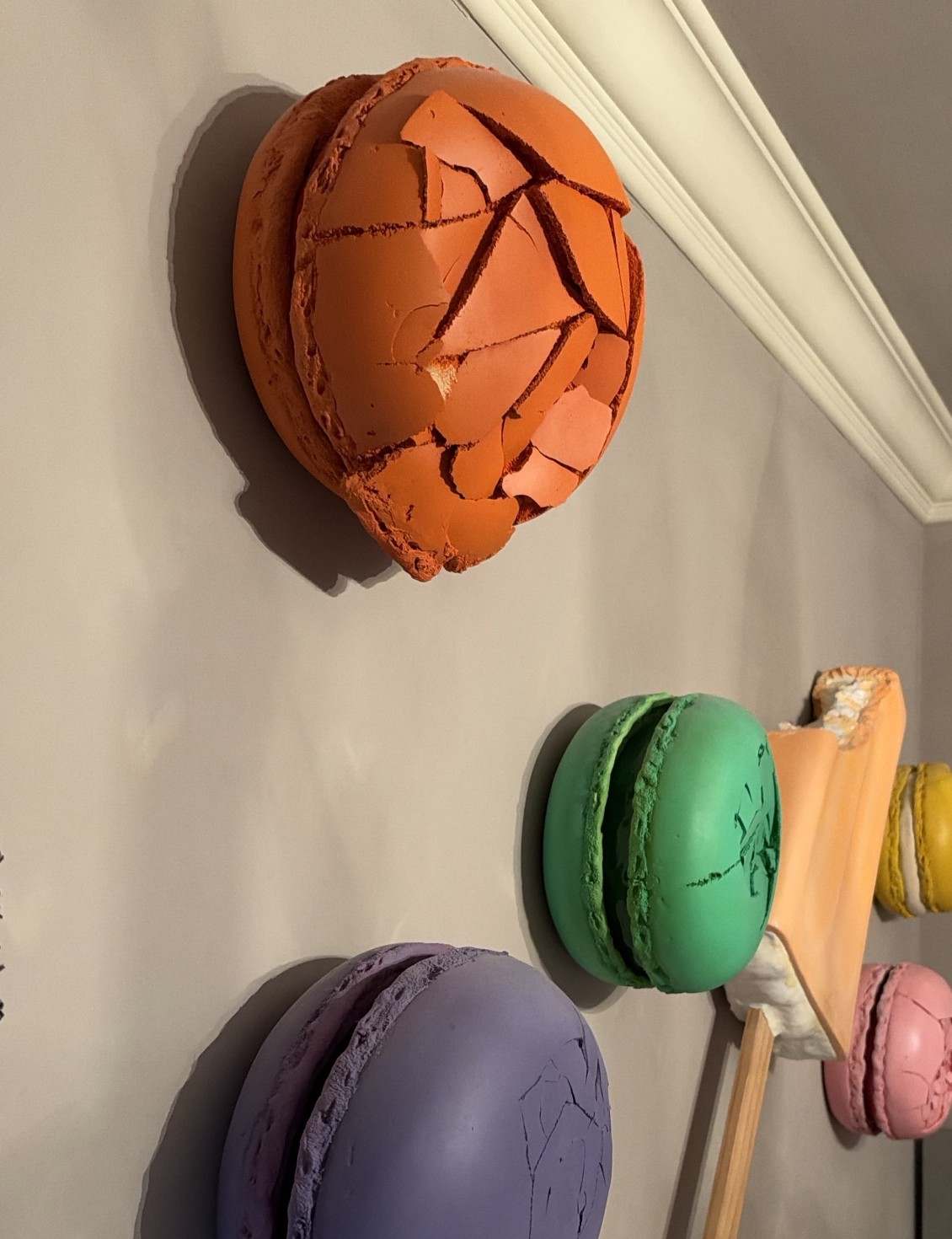
The three common materials
Carved foam with a hard coat
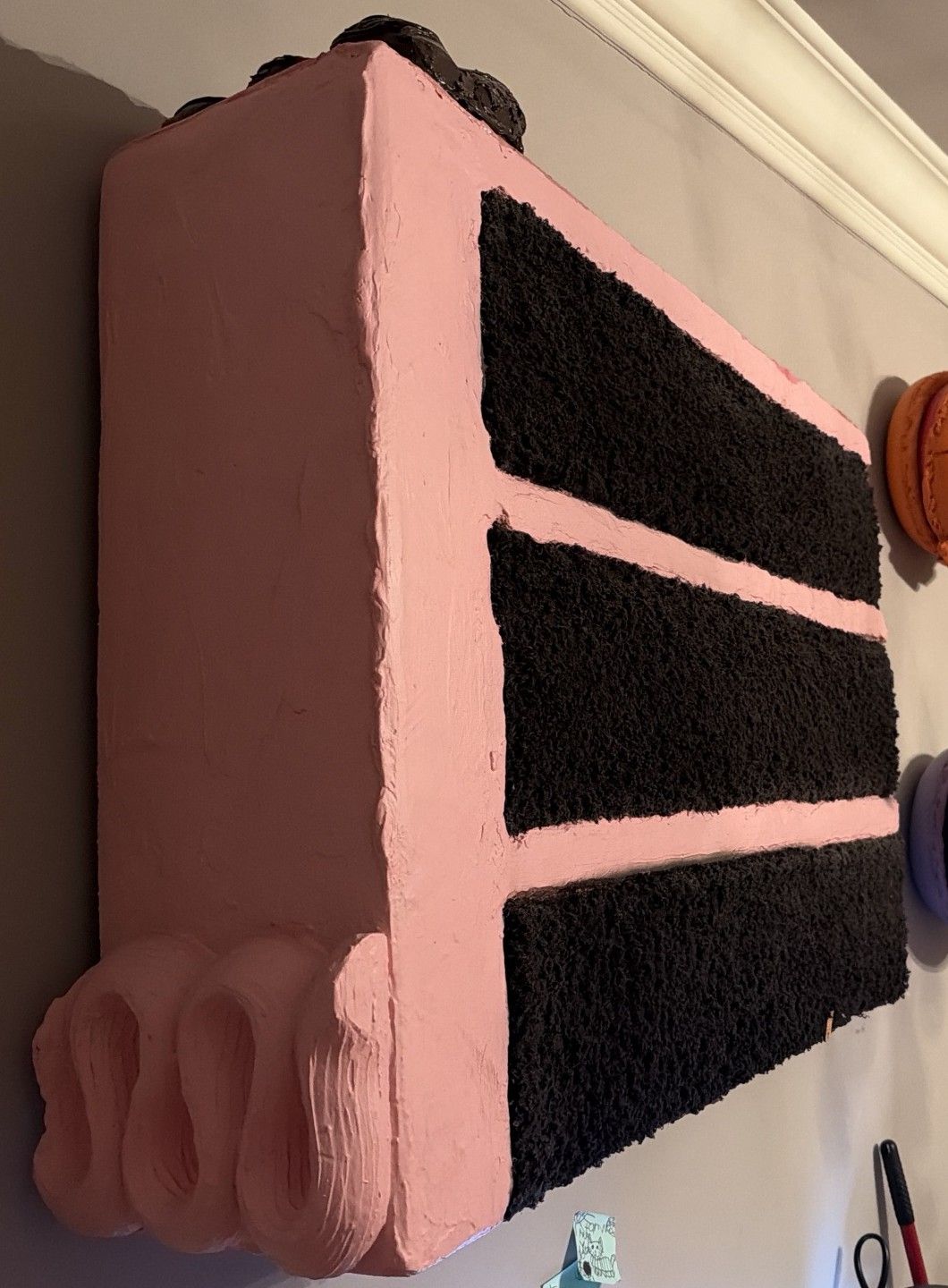
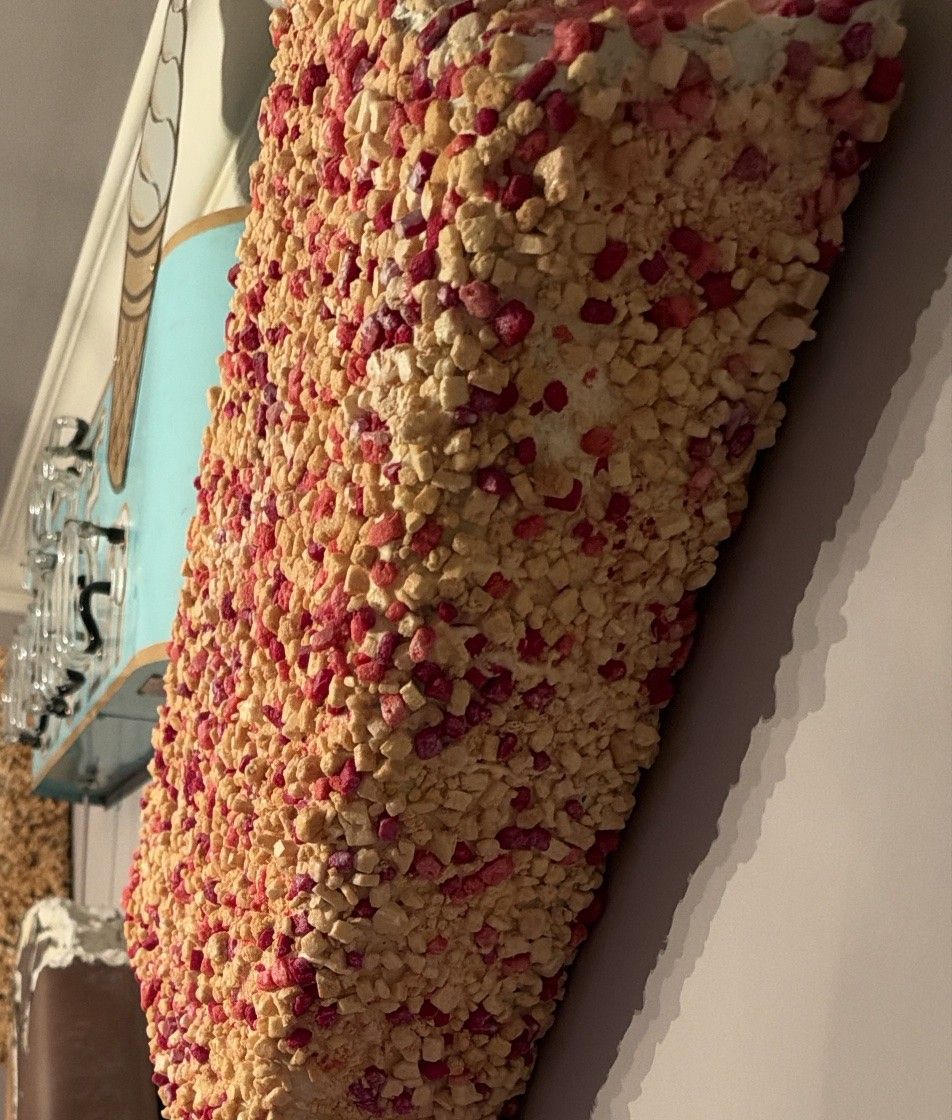
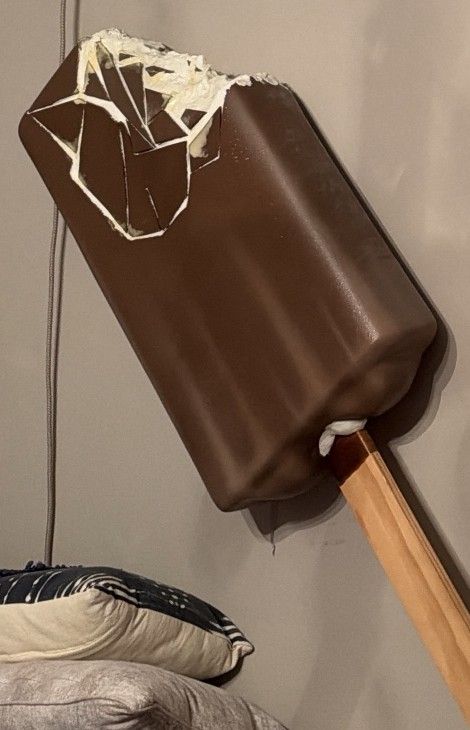
This is how most large food sculpture and prop work is built. The shape is carved from foam, usually EPS (expanded polystyrene, the white beady kind) or XPS (extruded polystyrene, denser and smoother). Then it’s sealed with a hard coat that protects the foam and gives it a surface to sculpt details and paint on.
- Why makers use it: a big shape stays light, so it can hang on a wall.
- What to know: it’s tough for decor but it isn’t a toy. A hard knock can dent it.
Cast resin
Liquid resin poured into a mold and cured. Resin captures fine detail and feels solid in the hand, but it gets heavy fast as pieces get bigger. It’s common for small and medium pieces and for anything made in multiples from one mold.
Fiberglass
Layers of glass fiber and resin over a form. Strong, weather-capable when finished right, and the go-to for outdoor sculpture and big storefront pieces. It costs more and weighs more than foam.
How to read a sculpture listing
Before you buy any wall sculpture, look for these on the label:
| Spec | Why it matters |
|---|---|
| Medium | Tells you weight class and whether it can go outside. |
| Dimensions (W x H x D) | Depth is the one people forget. Check it for walkways and over beds. |
| Weight | Decides your hardware. |
| Hanging method | Cleat, D-rings, keyhole, or wire. Tells you what goes on the wall. |
| Indoor or outdoor | Most painted sculpture is indoor only. |
Every piece at Gettin’ Store carries a gallery-style label with all of it. If a field is missing, ask and we’ll measure it for you.
How to hang a giant food sculpture
French cleat. Two interlocking strips cut at 45 degrees, one on the wall and one on the art. The piece drops onto the wall strip and locks in. It spreads the weight across a long line, makes leveling easy, and is the best option for anything big.
D-rings. Metal rings screwed into the back, one on each side, hung on two hooks or screws. Two points keep it from tilting. Good for medium pieces.
Keyhole hangers. A slot on the back that slides over a screw head. Clean and hidden, best for lighter pieces.
The hardware rule: screw into studs when you can (in most U.S. homes they’re 16 inches apart, center to center). When you can’t, use wall anchors rated for at least twice the weight of the piece. Over a bed or a crib, go with studs and a cleat, every time.
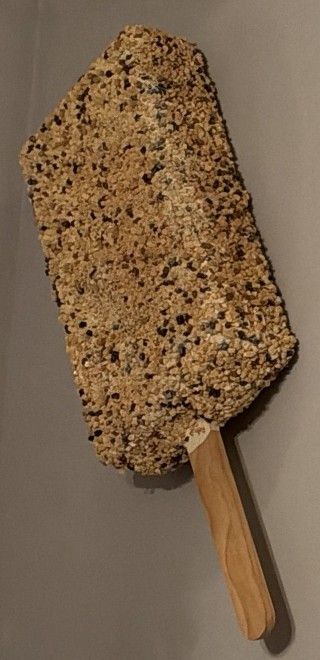
Tilted on purpose? Popsicles look best on an angle. Use two mounting points so the angle you set is the angle it keeps.
How to care for it
- Dust it. A soft brush gets into crumbles and cracks better than a cloth.
- Keep it out of direct sun. UV light fades pigments over time, pastels first.
- Skip the chemicals. No glass cleaner, no solvents, no magic erasers. A barely damp cloth for sticky spots, then dry it.
- Mind the humidity. Avoid hanging right above a steamy shower, dishwasher vent, or fryer.
- Re-check the hardware once a year. Especially in a kid’s room or a busy shop.
See it on a real wall
Browse 3D wall art ready to hang, or read how one family built a candy bedroom around giant macarons and a cake slice.
Frequently asked
What are giant food props made of?
Usually carved foam (EPS or XPS) sealed with a hard coat and painted. Higher-end and outdoor pieces may be cast resin or fiberglass. Small props can be polymer clay or silicone.
How do you hang a heavy sculpture on drywall?
Screw into a wall stud whenever you can. In most U.S. homes studs sit 16 inches apart. If there's no stud where you need it, use anchors rated for at least twice the sculpture's weight, and use two mounting points so it can't rotate.
Can giant food sculptures go outside?
Only if they were built for it. Indoor paints and coatings fade and crack in sun and weather. Ask the maker before you put any piece outdoors.
How do you clean a foam sculpture?
Dust with a soft, dry brush or microfiber cloth. For sticky marks, use a barely damp cloth and dry it right away. No solvents, no abrasive sponges, no soaking.