What Is a Face Jug? The Real History Behind the South's Strangest Pottery
Updated · Gettin' Store
Where face jugs started
Potters around the world have put faces on vessels for thousands of years. In America, the story most people mean when they say “face jug” starts in one place: the Edgefield District of South Carolina, in the mid-1800s.
Edgefield was a stoneware center built on enslaved labor. Museum records link a number of surviving face vessels to enslaved potters at Thomas Davies’ Palmetto Firebrick Works in the mid-1860s and at Lewis Miles’s potteries. The vessels are small, intense, and unmistakable: a face pinched out of dark stoneware, with eyes and teeth made from kaolin, a bright white clay the Edgefield area was known for. That white-on-dark contrast is still the signature of the form today.
The Kongo connection
The Museum of Fine Arts, Boston notes that kaolin matters in many African ritual practices, especially in Kongo nkisi figures. It also points to the Wanderer, an illegal slave ship that landed at Jekyll Island, Georgia in 1858 carrying 407 Africans, mostly from Kongo societies. More than 100 of them were sent to Edgefield potteries, shortly before the earliest known face vessels appeared there.
That’s why scholars believe the first face vessels had spiritual meaning for the people who made them, not a practical job. In 2022, the Metropolitan Museum of Art told this story in a major exhibition, Hear Me Now: The Black Potters of Old Edgefield, South Carolina, which counted roughly 160 known face vessels from that era in public and private collections.
From Edgefield to the folk pottery tradition
After the Civil War, the form traveled through Southern folk pottery. In the 20th century, potters such as Lanier Meaders in north Georgia and Burlon Craig in North Carolina’s Catawba Valley made face jugs famous with collectors, often with the teeth and eyes still set in white. Shops along back roads sold them to tourists, and the “ugly jug” became a Southern icon.
The folklore (enjoy it, don’t cite it)
You’ll hear that a face jug had to be ugly enough to scare the devil away from the house. Or that a scary face on the moonshine jug kept kids out of it. Or that they marked graves. These stories are fun and they get repeated everywhere, but they aren’t documented history. The honest answer is that the original meaning belonged to the potters who made them, and much of it wasn’t written down.
Face jugs now
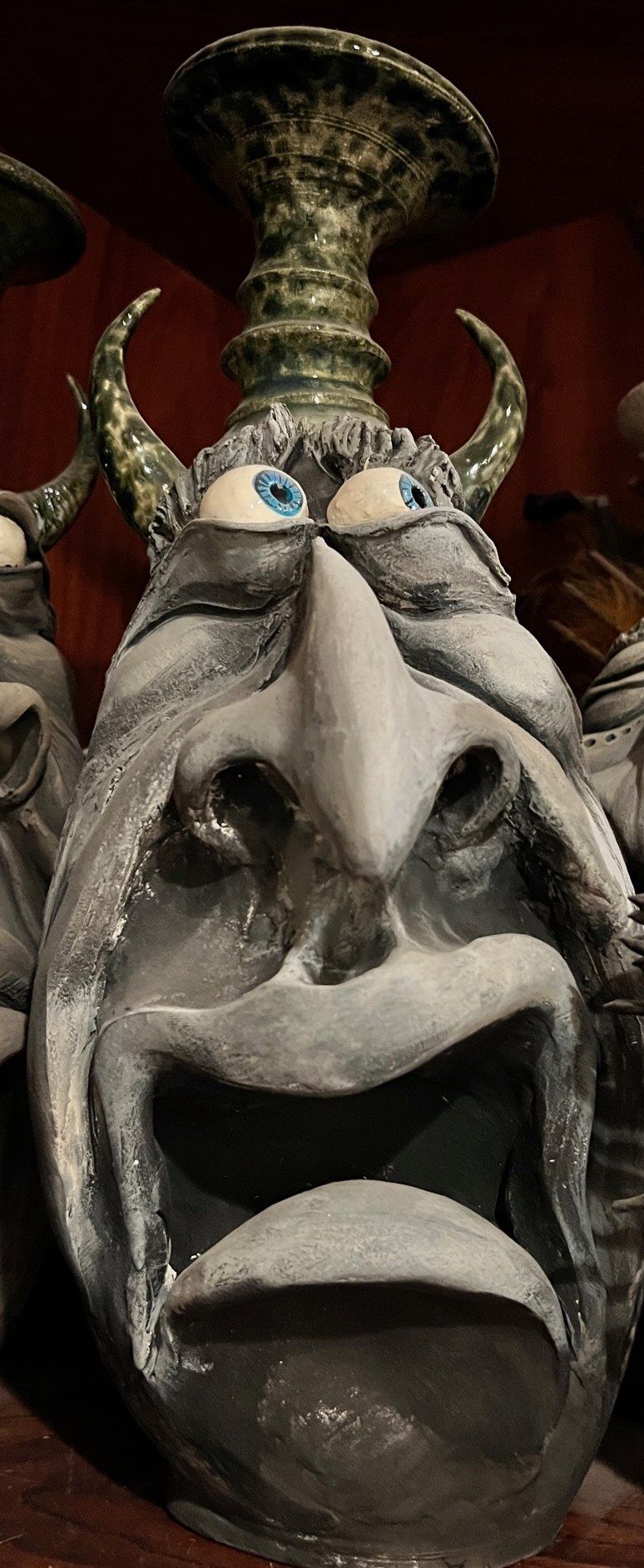
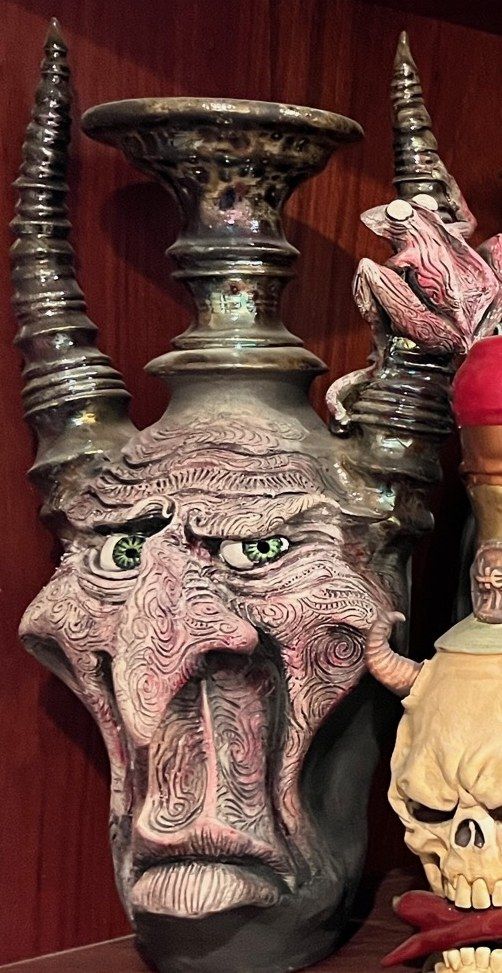
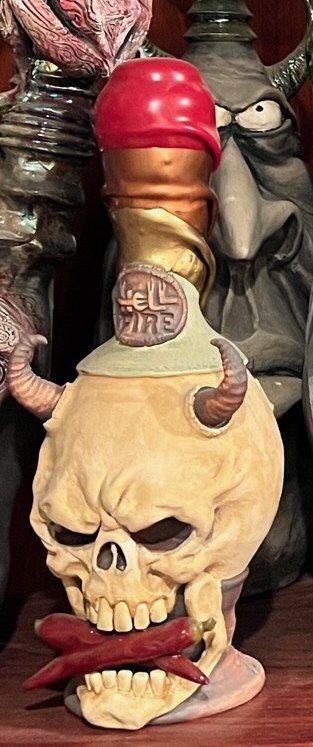
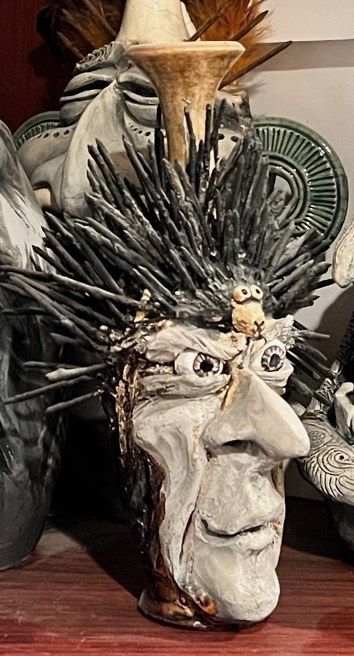
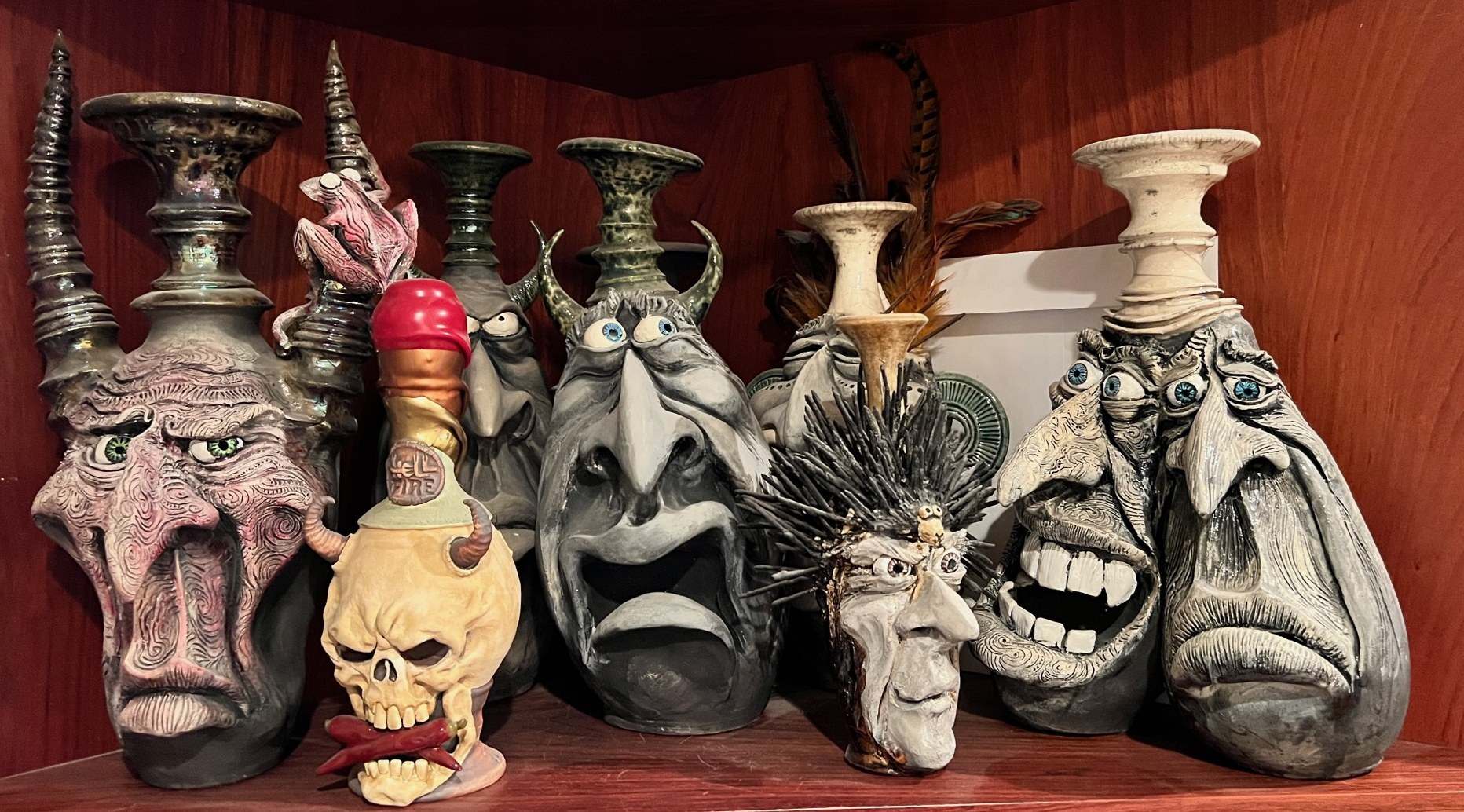
Contemporary makers treat the face jug like a stage. Horns, quills, beads, top hats, second faces on the back, skulls with chili peppers in their teeth. Some keep the traditional jug body with a handle. Others turn the form into candle-cup sculpture or full figures. What carries through is the attitude: big eyes, big teeth, big feelings.
How to buy a face jug
- Decide: antique, folk, or contemporary. A 19th-century Edgefield vessel is a museum-level object with prices to match. Mid-century folk pieces are a collecting category of their own. Contemporary jugs are where you’ll find the wildest designs.
- Ask who made it. A signature, a maker’s mark, or a clear attribution adds meaning and value.
- Check the teeth. They’re the most fragile part. Chips happen, so ask about condition and look close.
- Ask about food safety. Most decorative glazes aren’t meant for food or drink.
- Buy the face that gets a reaction out of you. Laugh, flinch, or both. That’s the right one.
Sources
- Museum of Fine Arts, Boston: Face jug collection record
- Smithsonian, National Museum of American History: Face vessel
- The Metropolitan Museum of Art, Hear Me Now: The Black Potters of Old Edgefield, South Carolina (2022)
See them on a shelf
Our face jugs are contemporary, one-of-one pieces: a screaming horned jug, a two-faced grinner, a skull with chili peppers in its teeth, and more. Every one is the only one.
Frequently asked
Where do face jugs come from?
In the United States, the earliest known face vessels were made by enslaved Black potters in the Edgefield District of South Carolina in the mid-1800s. The tradition later spread through Southern folk pottery in Georgia and North Carolina.
Why do face jugs have white eyes and teeth?
On the original Edgefield vessels, the eyes and teeth were made from kaolin, a white clay the Edgefield area was known for. Museums connect that use of white clay to ritual objects from the Kongo region of Central Africa.
Why are face jugs so ugly?
Folklore offers a few answers: ugly enough to scare off the devil, or to keep kids away from the moonshine. Those are stories, not documented history. Scholars believe the earliest Edgefield face vessels had spiritual rather than practical uses.
Are old face jugs valuable?
Nineteenth-century Edgefield face vessels are rare museum pieces. Works by well-known 20th-century folk potters are collected seriously too. Contemporary face jugs are priced on the maker, size, and detail.
Can you use a face jug as a real jug?
Treat decorative face jugs as sculpture. Unless the maker states a glaze is food safe, don't store food or drink in one.