What Is Food Pop Art? From Oldenburg's Floor Cake to Your Wall
Updated · Gettin' Store
Where food pop art came from
Pop Art started in Britain in the mid-1950s and took off in the United States in the early 1960s. The idea was simple and a little rude to the art world at the time: the stuff in your kitchen and on the supermarket shelf deserved to be in a museum as much as a landscape did.
Food was the perfect subject. Everybody eats. Everybody recognizes a soup can, a burger, a slice of cake. Change the scale or the color of something that familiar and people do a double take, and the double take is the art.
A few milestones worth knowing:
- 1956: Richard Hamilton’s collage Just what is it that makes today’s homes so different, so appealing? shows a bodybuilder holding a giant lollipop with the word “POP” on it. It’s often called one of the first works of Pop Art, and the star prop is candy.
- 1961: Claes Oldenburg rents a storefront on East Second Street in New York and calls it The Store. He fills it with plaster sculptures of food and everyday goods, painted in bright enamel, and sells them right there. An artist running a store full of sculpted food. We think about that a lot.
- 1962: Andy Warhol shows 32 paintings of Campbell’s Soup cans, one for each flavor. The set is now in the collection of the Museum of Modern Art.
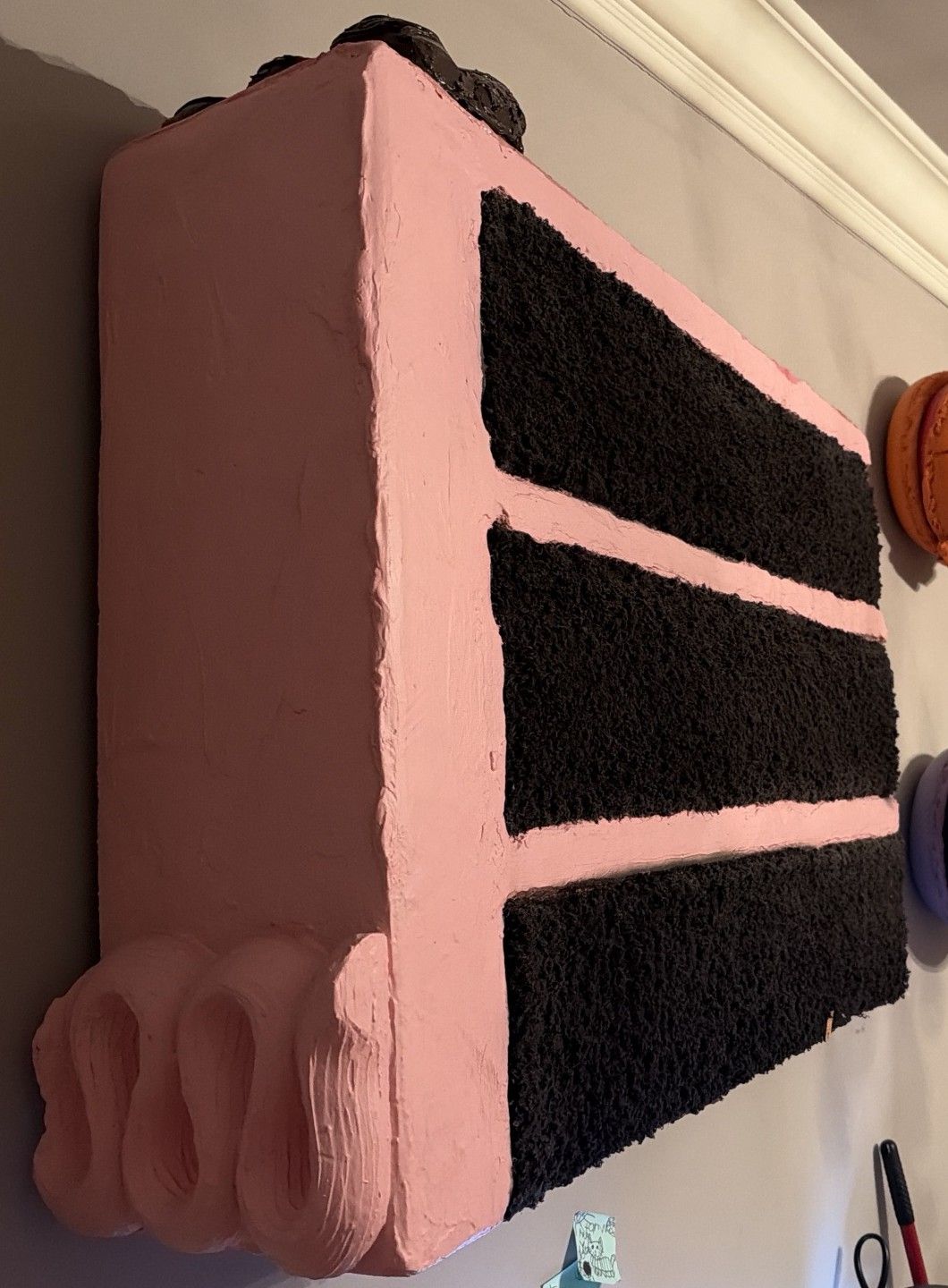
- 1962: Oldenburg makes Floor Cake, a soft sculpture of a slice of cake nearly ten feet long, built from painted canvas stuffed with foam rubber and cardboard boxes. It’s also at MoMA today.
- 1963: Wayne Thiebaud paints Cakes, rows of frosted cakes on display stands, now at the National Gallery of Art in Washington.
Why food works as pop art
It’s a shared memory. Almost everyone in the U.S. has a story about an ice cream truck, a birthday cake, or a bakery case. Food pop art borrows that memory and hands it back to you bigger.
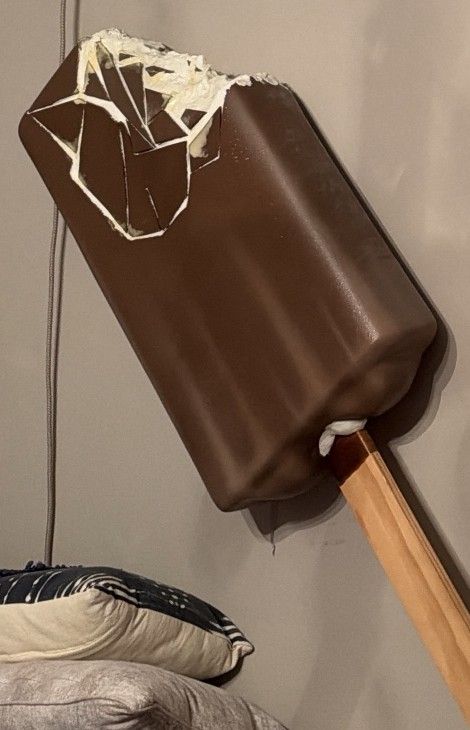
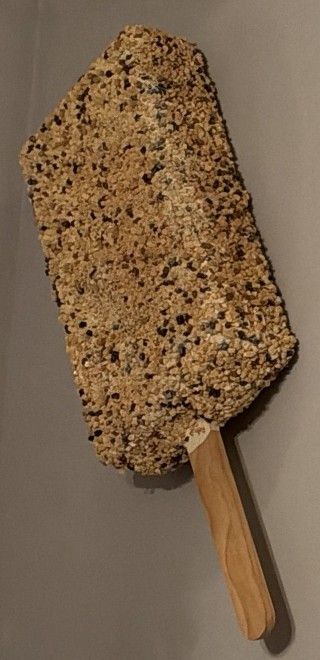
Scale is the joke. A popsicle is a small thing you hold for five minutes. A popsicle you could lie down next to is ridiculous, and ridiculous is memorable.
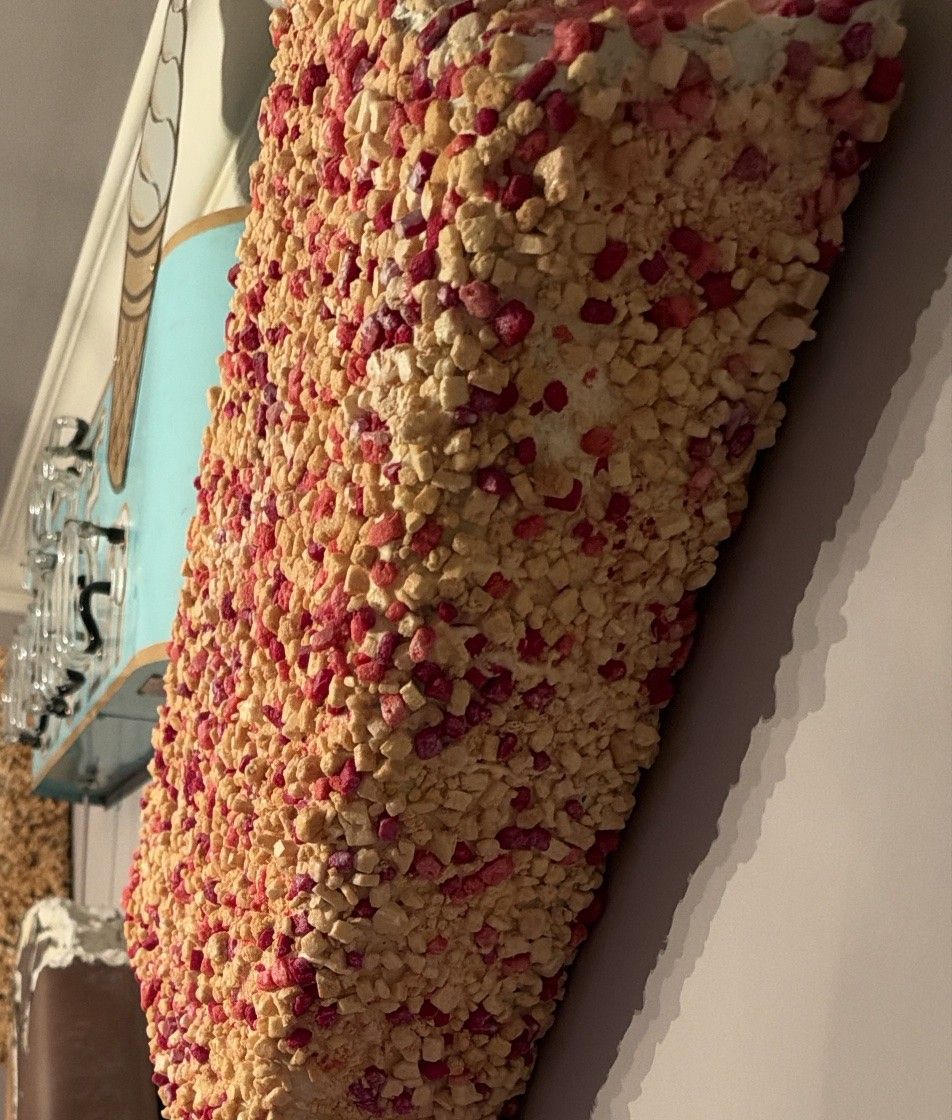
It’s honest about being fun. A lot of art asks you to figure out what it means. Food pop art tells you right away, then rewards you for looking closer: the crumbles, the cracks, the bite mark.
Food pop art in 3D vs. on canvas
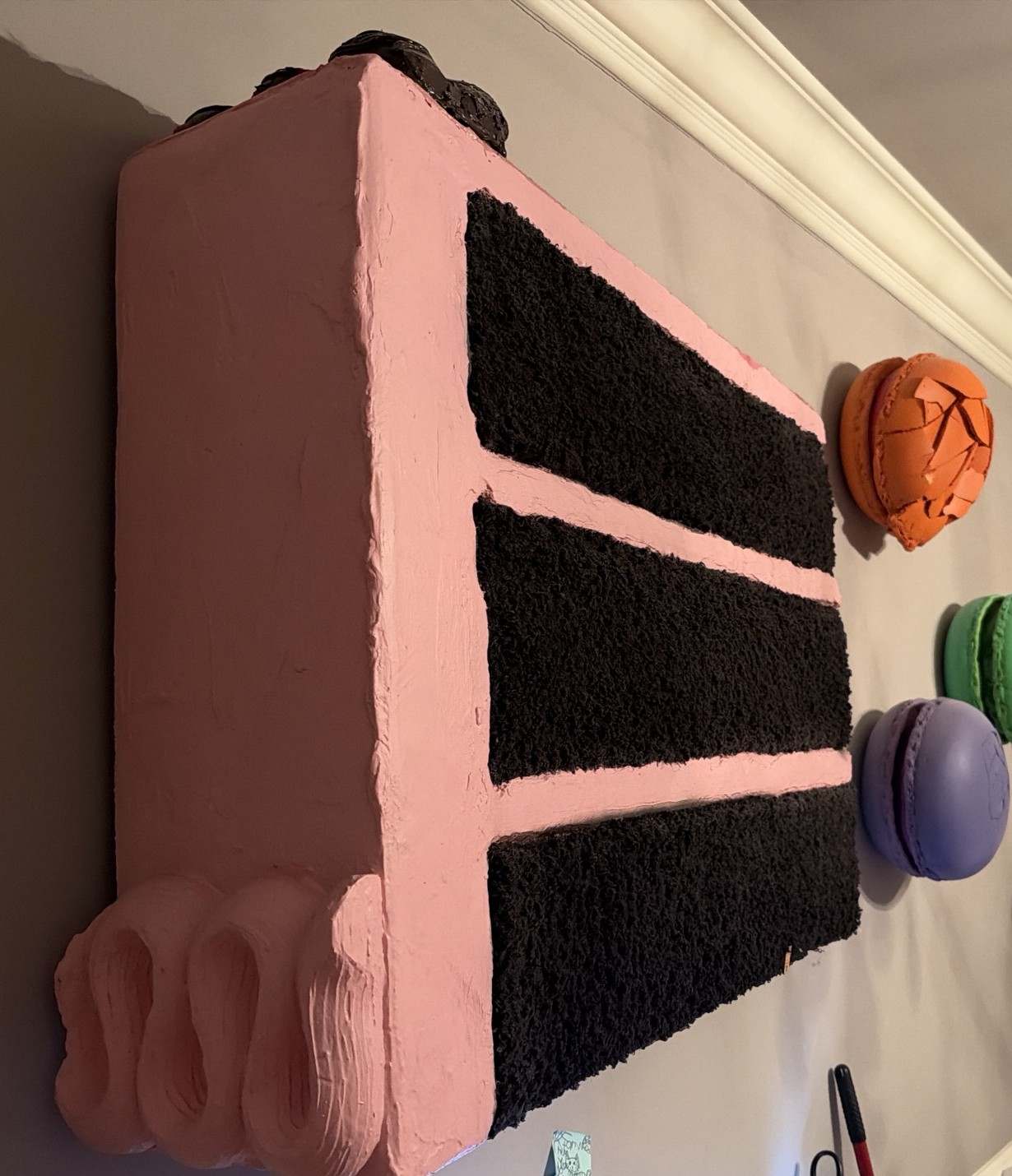
Paintings like Thiebaud’s cakes get their power from thick paint and light. Sculpture gets its power from presence. A giant slice of cake on your wall throws a real shadow, changes as the daylight moves, and makes people walk over to it. That’s why one sculpture can carry a whole room.
It’s also why pop art sculpture is the format we build in at Gettin’ Store. See what’s available now in pop art sculptures.
How to buy food pop art (and not get a knockoff)
- Decide original or print. Prints and mass-produced resin pieces are fine decor, but they’re not rare. An original one-of-one exists once.
- Ask for the paperwork. Medium, dimensions, weight, year, and a statement that no other copies exist. Every piece we sell lists all of it on a gallery-style label.
- Check the hanging. Sculpture has weight and depth. Ask how it mounts before you fall in love with a spot on the wall.
- Watch for borrowed logos. Pop culture-inspired is great. A copied trademarked logo or character is a legal problem for the seller and, sometimes, a headache for the buyer.
- Buy the one that makes you laugh. Seriously. Food pop art is supposed to be fun. If a piece makes you grin from across the room, that’s your piece.
Make your own pop art moment
If the food that defines your childhood isn’t in the shop, it can be. We build commissions from a memory, a photo, or a menu, as long as it’s yours to riff on.
Frequently asked
Who is the most famous food pop artist?
Claes Oldenburg is the name most tied to food sculpture. His giant soft burgers, ice cream cones, and the nearly ten-foot Floor Cake (1962) made oversized food a serious art form. Andy Warhol's Campbell's Soup Cans (1962) are the most famous food pop art paintings.
Is food pop art still popular?
Yes. Oversized food sculpture shows up in galleries, dessert shops, museums of ice cream, and collectors' homes, because a giant version of a food everyone knows is instantly readable and instantly shareable.
What's the difference between a pop art print and a pop art sculpture?
A print is a reproduction, usually made in quantity. A sculpture is a three-dimensional object, and a one-of-one sculpture exists exactly once. That scarcity is why originals hold value and prints usually don't.
How do I know if a pop art piece is an original?
Ask for the catalog number, the year, the medium, and whether any other copies or editions exist. An original one-of-one piece should come with a written certificate of authenticity.